
As a custom furniture maker, I’ve helped countless clients choose the ideal dining table for their space. While personal preference plays a role, the best shape for your table depends on two key factors:
- The size and shape of your dining area
- The number of people you typically seat
Matching the right dining table shape to your space ensures better flow, functionality, and aesthetic harmony. Let’s explore the most common dining table shapes and how they fit different needs.
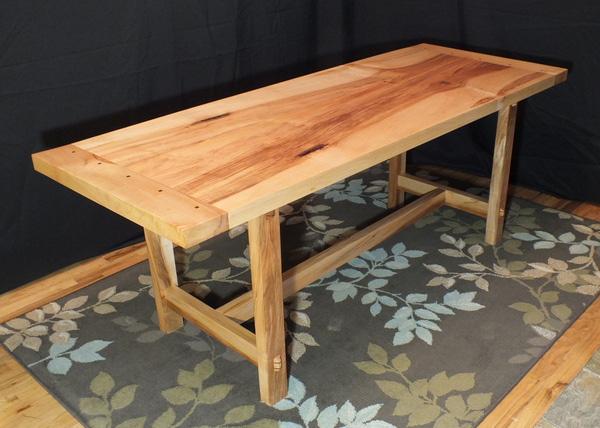
Rectangular Dining Tables: Classic & Versatile
Rectangular tables are the most popular choice—and for good reason. Most dining rooms are rectangular, making this shape a natural fit. They’re also ideal for seating more than four people, especially if you opt for an extendable design with a leaf for extra guests.
Key Considerations:
- Width matters: A standard rectangular table should be 36 to 42 inches wide. Anything narrower may not comfortably fit place settings and serving dishes.
- Narrow rooms? If space is tight, consider a sideboard or buffet table for food, keeping the dining surface clear.
- Great for entertaining: Perfect for larger gatherings, especially with extension leaves.

Square Dining Tables: Intimate & Space-Saving
Square tables work beautifully in square-shaped rooms and are ideal for smaller groups. If your daily meals are for two to four people, a square table creates a cozy, inviting atmosphere without feeling too spacious.
Key Considerations:
- Best for small gatherings: Avoids the “empty table” effect when only a few people are seated.
- Flexible for expansion: Some square tables come with leaves to accommodate extra guests when needed.
- Pair two for versatility: Two square tables can be combined into a larger rectangle for special occasions.

Round Dining Tables: Social & Cozy
Round tables are perfect for fostering conversation—everyone faces each other, making meals feel more intimate. They’re a fantastic choice for small dining areas or breakfast nooks.
Key Considerations:
- Great for small spaces: No sharp corners mean easier movement in tight rooms.
- Limited for large groups: Very large round tables can make conversation difficult (shouting across the table isn’t ideal!).
- Extension options: Some round tables come with leaves to expand seating when needed.

Oval Dining Tables: The Best of Both Worlds
Oval tables offer the same benefits as rectangular ones but with softer edges. The rounded corners make them appear less bulky, making them a smart choice for narrow or smaller rooms.
Key Considerations:
- Space-saving illusion: The curved edges make the table feel less imposing.
- Slightly less surface area: Compared to a rectangle, an oval table may have less usable space.
- Ideal for occasional large gatherings: Works well when you need flexibility in seating.
Final Thoughts: Which Shape is Right for You?
As a furniture maker, I always advise clients to consider both function and form. Think about:
- Your daily needs (how many people usually dine together?)
- Your space (room shape, traffic flow, and available space)
- Your entertaining habits (do you frequently host large groups?)
If you’re still unsure, a custom-made table can be tailored to fit your exact needs—whether that’s an extendable design, a unique size, or a shape that perfectly complements your home.
Have questions about choosing the right dining table? Feel free to reach out—I’d love to help you create a piece that’s both beautiful and functional!


I’m the owner of Benham Design Concepts, a mixed media art studio where I design and build custom furniture and other works of art using wood, glass, stone, and various metals.
In this blog, I talk about the art I create, my journey, and the things I learn along the way.